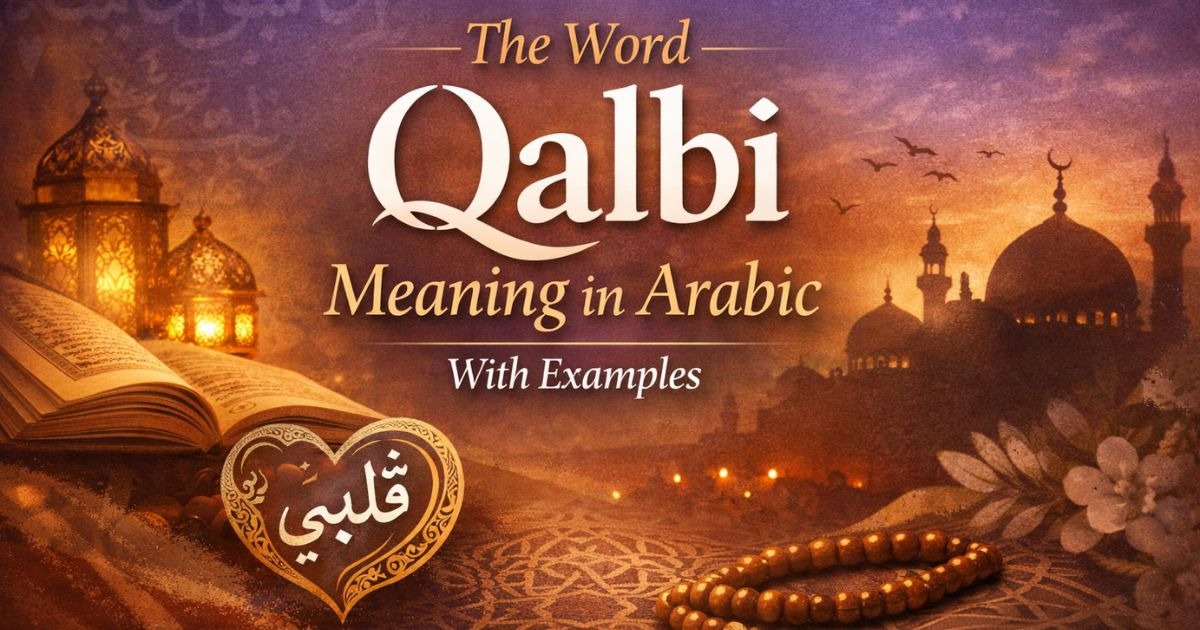
The word qalbi carries a deep emotional tone in Arabic that instantly touches the heart. Rooted in the word qalb, meaning heart, qalbi translates to my heart. It is not just a literal term but a warm expression of closeness, care, and emotional connection. People often use it when they want to speak lovingly and sincerely.
In daily conversations, qalbi appears in romantic phrases, songs, and gentle speech. When someone says ya qalbi, they are addressing another person with affection, similar to calling someone “my dear” or “my love.” The word naturally conveys tenderness without needing extra explanation.
Understanding the Qalbi Meaning in Arabic helps you feel the emotion behind Arabic expressions. It shows how language can turn simple words into powerful symbols of love and attachment.
The Meaning of “Qalbi” in Arabic
The linguistic root of qalbi shows how Arabic connects language with emotion. Derived from the root related to the heart and transformation, the word reflects inner feelings and emotional movement, making it both grammatically meaningful and emotionally expressive.
Grammatical Forms:
- One root, many emotions
Grammar shaped by the heart
Words that change with meaning
Language built on feeling
Arabic possession is expressed by attaching endings directly to the noun. This system keeps sentences short while preserving emotional clarity.
Small suffixes, deep meaning
Grammar that feels personal
Every form tells a story
Emotion meets structure
Learning how qalbi changes in different grammatical forms helps learners understand Arabic more deeply. It shows how personal connection is built directly into words, allowing speakers to express ownership, emotion, and closeness through simple yet powerful linguistic patterns.
Examples of “Qalbi” in Arabic Sentences
| Arabic Sentence | Transliteration | English Meaning |
| قَلْبِي يَشْتَاقُ إِلَيْكَ | Qalbi yashtāqu ilayka | My heart longs for you |
| يَا قَلْبِي، كُنْ قَوِيًّا | Ya qalbi, kun qawiyyan | Oh my heart, be strong |
| قَلْبِي مُمْتَلِئٌ بِالْحُبِّ | Qalbi mumtali’un bil-hub | My heart is full of love |
These sentences highlight how qalbi naturally fits into emotional expression. Whether sharing longing, encouragement, or love, the word adds warmth and sincerity. The qalbi meaning in Arabic remains deeply personal, making everyday phrases feel heartfelt and emotionally rich.
Spiritual Meaning of “Qalbi” in Islam
In Islamic teachings, the qalb holds deep spiritual importance beyond its physical role. It is viewed as the place where faith begins and intentions are formed. A sound heart leads to righteous actions, while a neglected heart can weaken one’s connection with Allah. This belief highlights why inner purity is strongly emphasized in Islam.
Because of this, the meaning of qalbi, or my heart, carries powerful spiritual weight. It refers to the inner self that seeks truth, sincerity, and closeness to God. The word gently reminds believers to protect their hearts from arrogance, dishonesty, and doubt, and to nurture them with faith and remembrance.
Cultural and Quranic Significance of “Qalbi”

In Arabic culture, qalbi reflects emotional depth and personal connection. It is commonly used to express care, sincerity, and warmth in everyday speech. Whether in music, poetry, or conversation, the word carries a gentle tone that instantly feels heartfelt.
Beyond culture, qalbi also holds spiritual importance. Its usage reflects how emotions and inner awareness are valued, showing that the heart is central to both human relationships and personal faith.
Quranic Reflection (Summary):
In the Quran, the heart is described as the center of understanding and awareness. A mindful heart is linked with guidance, wisdom, and spiritual clarity, emphasizing inner consciousness.
This perspective shows that a living heart is one that reflects, understands, and remains open to truth, making spiritual awareness a matter of inner sincerity rather than outward form.
Qalbi in Everyday Life and Language
The qalbi meaning in Arabic is woven into everyday speech, making conversations sound warmer and more personal. People use it to reassure, comfort, or show closeness without sounding formal. From casual chats to emotional moments, the word adds a soft, caring touch that feels genuine.
Beyond daily talk, qalbi has a strong presence in media and modern expression. It often appears in music, poetry, and storytelling to convey deep feelings. Many Arabic learners are drawn to the word because it captures emotion so simply, turning ordinary phrases into meaningful expressions of affection.
Ya Qalbi Meaning in Urdu
The phrase ya qalbi in Urdu conveys warmth and deep emotional connection. Literally meaning “O my heart,” it is used to show love, care, or sympathy. People naturally say it to comfort someone or express heartfelt feelings in both casual and poetic contexts.
In everyday life, ya qalbi strengthens bonds between family, friends, and loved ones. It captures tenderness and concern, making conversations feel personal and sincere while expressing emotions that words alone may not fully convey.
Ya qalbi, always close to my heart
A gentle way to show care
Words that speak feelings
Used in love, comfort, and poetry
Ya qalbi warmth in every phrase
Ya Qalbi Meaning in Urdu
| Word | Urdu Meaning | Context / Use |
| يا قلبي | اے میرے دل | Love, care, sympathy |
Ya Qalbi Meaning in Arabic
In Arabic, ya qalbi is a heartfelt phrase meaning “O my heart.” It combines the calling particle ya with qalbi (my heart), creating a gentle expression of love, care, or sympathy. People often use it in conversations, songs, or poetry to convey warmth and emotional connection.
This phrase is versatile in daily life. It can comfort someone in distress, show affection to a loved one, or simply express closeness. Its charm lies in the way it naturally communicates sincerity and tenderness without needing long explanations.
Ya qalbi a word full of love
Speak from the heart with ya qalbi
Comfort, care, and connection in one phrase
A gentle call to someone you cherish
Ya qalbi emotions made simple
Ya Qalbi Meaning in Arabic
| Arabic | Pronunciation | Meaning | Usage |
| يا قلبي | Ya qalbi | O my heart | Love, care, empathy |
Ya Qalbi Meaning in English
In English, ya qalbi translates to “Oh my heart,” carrying the same warmth and affection as in Arabic. It is commonly used to express love, care, or sympathy in everyday speech, songs, or heartfelt conversations.
The phrase conveys emotional closeness and tenderness. It can strengthen bonds between friends, family, or lovers, making words feel personal and sincere while expressing deep feelings in a simple, natural way.
Ya qalbi feelings from the heart
Express love simply with ya qalbi
A phrase full of warmth and care
Connect emotionally with those you cherish
Ya qalbi words that touch the soul
Ya Qalbi Meaning in English
| Phrase | Translation | Usage |
| Ya Qalbi | Oh my heart | Affection, love, sympathy |
Ya Hayati Meaning
The phrase ya hayati in Arabic carries a deep emotional meaning and is often used to express strong attachment. Literally translating to “O my life,” it reflects how important someone is to the speaker. Using this phrase suggests that the person holds a central place in one’s heart and daily thoughts, making it a powerful term of endearment.
In everyday language, ya hayati is spoken between loved ones to show care, reassurance, and affection. It appears frequently in music, poetry, and emotional conversations, adding warmth and sincerity. The phrase turns simple words into meaningful expressions, making emotions feel genuine and deeply personal.
Ya Rouhi Meaning

The phrase ya rouhi in Arabic carries a deeply emotional and personal meaning. Literally translated as “O my soul,” it expresses a bond that goes beyond surface-level affection. When someone uses this phrase, they are signaling that the person they are addressing holds an essential place in their inner world. It reflects trust, closeness, and emotional depth that words often struggle to capture.
In everyday use, ya rouhi is common in romantic exchanges, sincere conversations, and poetic language. It appears in songs and verses where emotions are meant to feel raw and genuine. Saying ya rouhi suggests that the connection is not just emotional, but spiritual, highlighting a profound sense of care, attachment, and heartfelt closeness.
Qalbi in Arabic
The word qalbi in Arabic carries a strong emotional presence that goes far beyond its literal meaning. While it directly translates to “my heart,” it is often used to express deep personal attachment and emotional closeness. Saying qalbi signals sincerity and warmth, making conversations feel more intimate and meaningful. It is a gentle way to show that feelings come from a genuine place.
In everyday life, qalbi appears in loving speech, emotional moments, and artistic expression. People use it naturally when speaking to those they care about, whether offering comfort or affection. Its frequent use in music and poetry reflects how deeply the concept of the heart is tied to emotion and connection in Arabic culture.
Fi Qalbi Meaning
The phrase fi qalbi in Arabic carries a tender and meaningful message. Translating to “in my heart,” it suggests that a person, memory, or feeling holds an important place within one’s inner world. Using this phrase shows emotional honesty and a sense of closeness that goes beyond simple words. It often reflects feelings that are quietly held but deeply felt.
In everyday language, fi qalbi is used in moments of affection, remembrance, or reflection. It appears in loving conversations, poetry, and spiritual expressions where sincerity matters most. The phrase adds warmth to speech and helps convey emotions with grace, making connections feel genuine, personal, and deeply heartfelt.
Key Uses of Fi Qalbi:
• Holding someone close within the heart
• Feelings that quietly live inside
• A gentle way to express deep care
• When emotions stay safely within
• Words for what truly matters inside the heart
My Qalbi Meaning
The phrase my qalbi blends English with Arabic to create a warm and modern expression of affection. While qalbi means “my heart,” adding “my” emphasizes emotional closeness and personal connection. People use this phrase to speak lovingly, making their words feel sincere and intimate. It reflects a soft, caring tone that goes beyond ordinary language.
In everyday use, my qalbi appears in personal messages, romantic chats, and creative writing. It is often chosen to express feelings that are gentle yet meaningful. The phrase carries emotional depth while sounding natural and expressive, allowing people to share love, care, and attachment in a heartfelt way.
Captions under Common Situations for My Qalbi
• A sweet way to address someone special
• Perfect for heartfelt messages and notes
• Adds warmth to loving conversations
• Expresses closeness without many words
• A modern phrase filled with emotion
Qalbi Meaning in Arabic Pronunciation

Understanding the pronunciation of ya qalbi helps the phrase sound natural and heartfelt. When spoken gently and with feeling, each syllable blends smoothly, allowing the words to carry warmth, affection, and emotional sincerity rather than sounding mechanical.
• Pronunciation shapes emotion
• Say it softly, feel it deeply
• Let the words flow naturally
• Heartfelt sounds matter
• Speak it with warmth
Practice slowly, then combine the sounds smoothly. Natural tone makes the pronunciation feel emotional and sincere.
• Gentle speech brings meaning
• Words sound better with feeling
• Emotion improves pronunciation
• Speak from the heart
• Let warmth guide your voice
How to Pronounce “Ya Hayati” Easily
The phrase Ya Hayati (يا حياتي) can be broken down for easier pronunciation:
- Ya → “Yah”
- Ha → “Ha” (soft and gentle)
- Ya → “Ya”
- Ti → “Tee”
When spoken together naturally, it sounds like: Yah-Ha-Ya-Tee.
How to Pronounce “Ya Rouhi” Easily
The phrase Ya Rouhi (يا روحي) can be broken down for simple pronunciation:
- Ya → “Yah”
- Rou → “Roo” (like the beginning of “roof” without the “f”)
- Hi → “Hee”
When said together naturally, it sounds like: Yah-Roo-Hee.
How to Pronounce “Qalbi” Easily
The word Qalbi (قلبي) can be broken down for easier pronunciation:
- Qal → “Kal” (soft “k” sound)
- Bi → “Bee”
When said together smoothly, it sounds like: Kal-Bee.
Common Misunderstandings or Mistakes
Many beginners mix up qalb and qalbi.
- Qalb is “heart,” qalbi is “my heart” small change, big meaning
Dialects affect pronunciation, like alby or qalbee
Formal Arabic usually prefers qalbi for clarity
Using qalbi correctly shows respect for language and conveys emotion naturally in conversation.
- Beginners often confuse qalb and qalbi, but remembering possession makes usage simple and correct.
- Dialects vary, yet understanding qalbi helps express affection accurately in both formal and casual Arabic.
How to Use “Qalbi” in Conversations

Using qalbi in conversation adds warmth and emotion, helping learners express affection, care, or praise naturally in Arabic.
Comfort loved ones with ya qalbi
Say qalbi ma‘aka to show closeness
Praise someone affectionately using ya qalbi
Express feelings like a native speaker
Make conversations heartfelt and sincere
Including qalbi in everyday speech lets you convey emotions naturally. Whether comforting, praising, or expressing love, it adds sincerity and depth, making your Arabic sound personal, fluent, and emotionally engaging in both casual and meaningful conversations.
Why You Should Learn “Qalbi”
Learning the word qalbi in Arabic is more than just memorizing its meaning—it’s about connecting with emotion. Words like ya qalbi allow you to express love, care, and tenderness naturally, making your conversations, reading, or listening to songs feel heartfelt and authentic.
Understanding qalbi also opens the door to Arabic culture and poetic expression. It shows how language carries emotion and social connection. By mastering this word, learners can engage more deeply with native speakers, appreciate literary and musical expressions, and communicate feelings in a way that goes beyond grammar and vocabulary.
How the Qalbi Meaning in Arabic Reflects Culture
The qalbi meaning in Arabic highlights the importance of emotion and connection in Arabic culture. Phrases like ya qalbi are used in music, poetry, and everyday conversation to express affection, care, and closeness, similar to saying “my dear” in English. Using it naturally conveys warmth and sincerity, showing how language reflects social values. Learning this phrase gives Arabic learners insight into cultural expression, demonstrating that qalbi is not just a word, but a reflection of emotional and social bonds.
Why the Qalbi Meaning in Arabic Matters to Learners
For Arabic learners, understanding the qalbi meaning brings the language to life. It allows students to express affection, care, and emotion naturally, making conversations feel genuine. Learning phrases like ya qalbi helps build a deeper connection with Arabic speakers, culture, and expressions of love, going beyond vocabulary to truly feel the language in context.
FAQs
What is the Qalbi Meaning in Arabic?
The Qalbi Meaning in Arabic is “my heart,” used to express love, affection, and emotional closeness naturally in conversations, songs, and poetry.
How is ya qalbi used in Arabic songs and poetry?
In songs and poetry, ya qalbi meaning in Arabic conveys deep emotion and tenderness, adding warmth and heartfelt feeling to the lyrics.
Can Qalbi be used in casual conversation?
Yes, the Qalbi Meaning in Arabic is commonly used in daily speech among family and friends to show care and emotional connection.
What emotions does the Qalbi Meaning in Arabic express?
The Qalbi Meaning in Arabic expresses love, sympathy, comfort, and affection, reflecting both romantic and friendly feelings in natural conversation.
How does understanding qalbi help Arabic learners?
Learning the Qalbi Meaning in Arabic helps students communicate emotions authentically and understand cultural expressions of love and care more deeply.
Conclusion
The Qalbi Meaning in Arabic goes beyond a simple translation of “my heart.” It captures emotion, affection, and sincerity in a single word. From daily conversations to music and poetry, understanding this phrase allows learners to connect more deeply with the language and the people who speak it. Using qalbi naturally adds warmth and feeling to your words.
Learning the Qalbi Meaning also opens a window into Arabic culture and emotional expression. It teaches you how native speakers show love, care, and tenderness in everyday life. By mastering this word, you not only improve your language skills but also experience the emotional richness behind every heartfelt phrase.
Logan Name Meaning: Origins, Spiritual Insight and 50 Nicknames


Leave a Reply