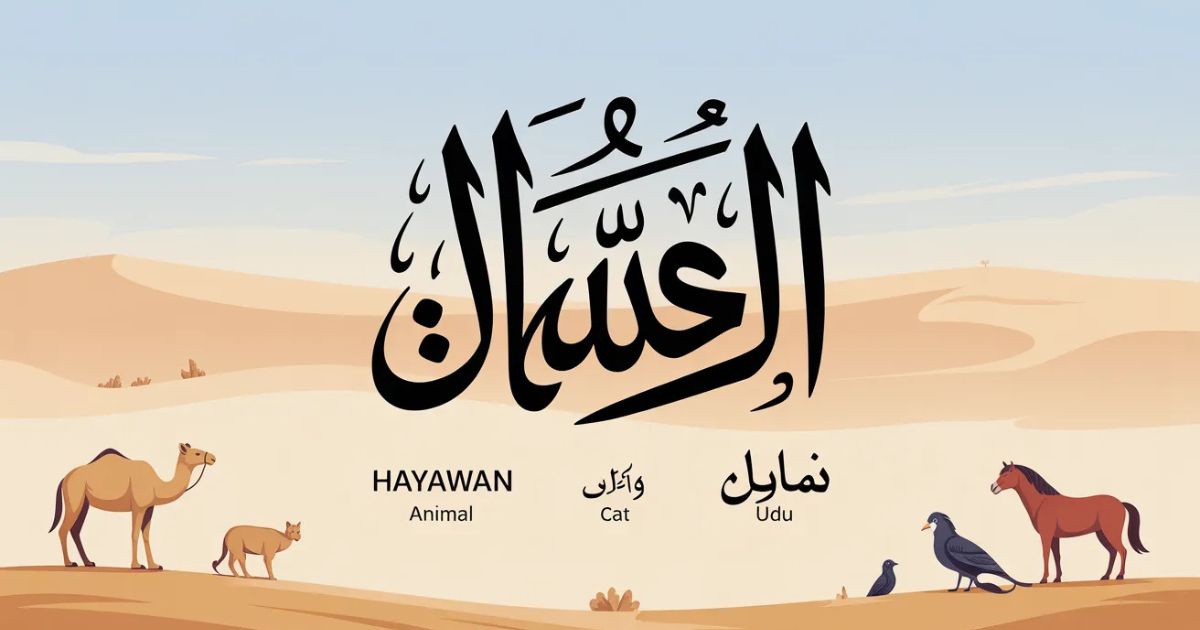
Language is powerful, and sometimes a single word can carry layers of emotion, culture, and meaning that go far beyond its simple translation. If you have ever come across the term and wondered about the Hayawan Meaning in Arabic, you are not alone, because this word often sparks curiosity due to how it is used in both everyday conversations and heated moments. While the literal Hayawan Meaning in Arabic refers to “animal,” its tone and intention can completely change depending on context, making it important to understand not just the definition but also the cultural background behind it. In this article, we will explore the true Hayawan Meaning in Arabic, how native speakers use it, and why knowing the accurate Hayawan Meaning in Arabic can help you avoid misunderstandings.
Understanding the Hayawan Meaning in Arabic is more than just learning a vocabulary word; it is about recognizing how language reflects emotions, humor, and sometimes even insult in Arab societies. The Hayawan Meaning in Arabic may seem straightforward at first glance, yet its usage in real-life situations can range from playful teasing to serious offense depending on tone and setting. That is why exploring the deeper Hayawan Meaning in Arabic through clear explanations and practical examples will give you confidence when you hear or use it yourself. By the end of this guide, you will have a complete and nuanced understanding of the Hayawan Meaning in Arabic, along with real examples that show how it functions in authentic communication.
The Meaning of “Hayawan” in Arabic
The term hayawan (حيوان) comes from the Arabic root ḥ-y-y (ح-ي-ي), which is directly connected to the concept of life and living. At its core, the word carries the meaning of “a living being” or “that which possesses life,” making it much deeper than a simple label for an animal. When exploring the Hayawan Meaning in Arabic, it becomes clear that the word originally described any creature characterized by movement, growth, and vitality. In classical Arabic thought, hayawan was not limited to animals alone; instead, it referred broadly to beings that were alive, in contrast to inanimate objects that lacked motion and spirit.
Over time, everyday usage narrowed the meaning, and in modern spoken Arabic, hayawan most commonly refers to an animal in the ordinary sense. However, in classical literature and Quranic language, the word can symbolize life itself, representing energy, existence, and the dynamic nature of creation. This broader dimension of the Hayawan Meaning in Arabic highlights how Arabic vocabulary often carries philosophical depth alongside practical meaning. Understanding this layered usage helps learners appreciate not only the dictionary definition but also the cultural and historical richness embedded within the word.
Key Meanings of “Hayawan”:
| Context | Meaning | Example |
| Modern Spoken Arabic | Animal (non-human creature) | “Al-qitt hayawan latif” (The cat is a gentle animal) |
| Classical Literature | Any being that possesses life | “Al-insan hayawan natiq” (The human is a rational living being) |
| Philosophical Usage | A creature defined by movement and growth | “La yusamma hayawan illa man lahu haraka” (Only that which has movement is called living) |
| Quranic Expression | The true and eternal life | “Wa inna al-akhirata lahiya al-hayawan” (Indeed, the Hereafter is the real life – Qur’an 29:64) |
When you explore the Hayawan Meaning in Arabic, you begin to see how one word can shift beautifully across different fields such as daily speech, classical scholarship, philosophy, and faith. Rather than carrying a single fixed definition, it adapts to context while still revolving around the central idea of life and vitality. This depth makes the Hayawan Meaning in Arabic more than just a vocabulary lesson; it becomes a reflection of how Arabic language connects linguistic structure with spiritual and intellectual meaning.
Linguistic Root and Grammatical Usage

The word hayawan is derived from the powerful Arabic root ḥ-y-y (ح-ي-ي), which revolves around the concept of life, vitality, and existence. From this same root come important words such as hayah (life) and hayy (living). This shared origin clearly shows how deeply connected the term is to the idea of being alive in both physical and spiritual senses.
Grammatically, hayawan functions as a masculine singular noun in Arabic. Its regular plural form is hayawanāt, commonly used in everyday speech to refer to animals collectively. The word can appear as a subject, object, or predicate in a sentence, making it flexible and easy to integrate into both formal and conversational Arabic structures.
Examples of Usage:
• Al-qird hayawan dhaki. → The monkey is an intelligent animal.
• Al-hayawanāt tahtaj ila ri‘ayah.→ Animals need care.
• Kullu hayawan lahu dawruhu fi al-tabee‘ah. → Every animal has its role in nature.
• Al-asmak min al-hayawanāt al-bahriyyah. → Fish are marine animals.
• Al-insan yatahammal mas’uliyyah tijah al-hayawanāt. → Humans carry responsibility toward animals.
Grammatical Table:
| Form | Arabic | English Meaning |
| Singular | حَيَوَان (hayawan) | Animal |
| Plural | حَيَوَانَات (hayawanāt) | Animals |
| Root | ح-ي-و (ḥ-y-w) | To live / Life |
The hayawan word is deeply tied to the Arabic root ḥ-y-w, which emphasizes life, movement, and vitality. This connection shows that even when we simply say “animal,” the word carries a sense of living energy and existence. Understanding its singular and plural forms, along with its root, allows learners to see how the concept of life is embedded in Arabic grammar and vocabulary, making hayawan both practical and philosophically meaningful.
Examples of “Hayawan” in Arabic Sentences
Practicing hayawan in complete sentences helps learners grasp its meaning, usage, and context in real-life Arabic. For instance, you might say, “Al-kalb hayawan wafi” (The dog is a loyal animal) to describe behavior, or “Al-hayawanāt ta‘eesh fi al-bustan” (The animals live in the garden) to talk about location. Using hayawan this way not only reinforces vocabulary but also improves sentence structure, allowing you to communicate clearly while respecting the nuances of the Arabic language.
Common Sentences:
• Al-far hayawan sagheer. → The mouse is a small animal
• Al-dabab hayawan quwi. → The bee is a strong animal
• Al-ghazal hayawan raqeeq. → The deer is a gentle animal
• Al-hut hayawan bahri. → The fish is a sea animal
• Al-baqara hayawan mufidah. → The cow is a useful animal
Using hayawan in sentences like these goes beyond memorizing vocabularyit reflects how Arabic speakers describe traits, behavior, and the essence of life. Each sentence connects the word hayawan to qualities such as gentleness, strength, or usefulness, making it both a linguistic tool and a glimpse into cultural perception of living beings. This approach helps learners see how language, meaning, and cultural context all work together naturally.
Types of Hayawan (Animals)
| Type | Arabic Word | Example Sentence |
| Domestic | داجن (dajin) | “Al-baqara hayawan dajin.” → The cow is a domestic animal |
| Wild | بري (barri) | “Al-fahd hayawan barri.” → The cheetah is a wild animal |
| Marine | بحري (bahri) | “Al-samak hayawan bahri.” → The fish is a marine animal |
| Flying | طائر (ta’ir) | “Al-burqash hayawan ta’ir.” → The eagle is a flying animal |
Categorizing hayawan into different types helps learners understand how Arabic speakers naturally describe the animal kingdom. By using terms like dajin, barri, bahri, and ta’ir, you can make your sentences more vivid and precise. These distinctions not only enhance vocabulary but also allow you to communicate about animals in a way that is culturally and contextually accurate, making your Arabic more expressive and authentic.
Cultural or Quranic Significance of “Hayawan”

In the Quran, hayawan is used to convey a meaning far beyond “animal.” For example, in Surah Al-‘Ankabut (29:64), it refers to the true and eternal life of the Hereafter, highlighting the spiritual depth of the term. This shows that the word can carry both literal and metaphorical significance depending on context.
Beyond religious texts, hayawan in Arabic culture often symbolizes the qualities and lessons that animals embody. Traits like patience, bravery, loyalty, and wisdom are associated with certain animals, making the word a tool for teaching moral values.
Poets and writers have historically used hayawan to draw comparisons between humans and animals, reflecting the harmony between nature and human behavior. This use gives the word cultural richness and philosophical weight.
By understanding these layers, learners see that hayawan meaning in Arabic is not just vocabulary; it connects language, spirituality, and moral insight, revealing how deeply language can reflect life and creation.
Cultural Notes:
• Al-jamal hayawan sabur → The camel is a symbol of endurance and faith
• Al-asad hayawan shuja‘ → The lion represents courage and strength
• Al-hamama hayawan salama → The dove signifies peace and purity
• Al-ghazal hayawan raqeeq → The deer reflects grace and gentleness
In Arabic culture, saying hayawan is more than identifying an animal it connects to the qualities and symbolism each creature embodies. Every animal carries lessons about life, movement, and the divine order of creation, making the word a bridge between language, culture, and philosophical reflection.
Common Misunderstandings or Mistakes

Many learners of Arabic make the mistake of using hayawan without considering context, which can lead to unintended offense. In modern slang, saying “Ya hayawan!” is not a neutral statement it translates to “You animal!” and is taken as a sharp insult. Understanding the tone, setting, and relationship between speakers is crucial, because the same word can be perfectly acceptable when describing actual animals but highly inappropriate when directed at a person. Being aware of these nuances helps learners use hayawan correctly and respectfully.
Common Mistakes:
• ❌ Saying “Ya hayawan” jokingly with friends can be offensive
• ❌ Mixing up hayawan (animal) with hayat (life) changes the meaning completely
• ❌ Ignoring the plural form hayawanāt can make sentences grammatically incorrect
• ❌ Using hayawan in formal writing when a more precise word is needed
• ❌ Mispronouncing the root letters ḥ-y-w alters the word’s meaning
Being aware of these common errors ensures that learners use hayawan accurately and appropriately in both speech and writing, maintaining clarity and respect in Arabic communication.
Correct Usage Tips:
• Use hayawan when talking about animals in general
• Say hayah or hayat when referring to life or existence
• Avoid saying “Ya hayawan!” to people unless in playful, joking contexts
• Remember the plural hayawanāt when discussing multiple animals
• Pay attention to tone to convey respect and clarity
Why You Should Learn “Hayawan”
Understanding hayawan meaning in Arabic goes beyond just knowing the word “animal”; it opens a window into Arabic culture, literature, and spirituality. By learning this term, you gain insight into how language reflects life, movement, and the natural order, as well as moral and symbolic lessons derived from animals in Arabic thought.
Mastering hayawan also enhances your comprehension of Quranic texts, classical poetry, and modern expressions, allowing you to recognize when the word refers to literal animals or conveys deeper meanings such as vitality, life, or moral qualities. This knowledge enriches both conversational skills and cultural literacy, making your Arabic more authentic and meaningful.
Benefits:
• Expands vocabulary about animals and living beings
• Deepens understanding of Quranic and classical texts
• Makes daily conversations more natural and expressive
• Reveals the structure and richness of Arabic root systems
• Connects language learning with cultural and spiritual insights
Learning hayawan meaning in Arabic offers more than just a word for “animal”—it builds a bridge between language, culture, and knowledge. By understanding its singular and plural forms, root connections, and symbolic usage, you gain tools to read literature, comprehend Quranic references, and describe life and nature more vividly. This makes your Arabic communication richer, more precise, and deeply connected to the cultural and philosophical context of the language.
Hayawan Meaning in Arabic at meaningvibes.com
At meaningvibes.com, learners can explore the hayawan meaning in Arabic with a variety of tools designed to make understanding easy and thorough. The platform provides clear examples of singular and plural usage, detailed pronunciation guides, and context from classical, modern, and Quranic Arabic. This helps students see how hayawan functions in real-life speech, literature, and spiritual texts.
The website also highlights the cultural and symbolic aspects of hayawan, showing how animals are represented in poetry, proverbs, and moral lessons across Arabic traditions. By connecting grammar, vocabulary, and context, it allows learners to grasp not just the literal meaning but also the broader significance of the word.
For students aiming to speak Arabic naturally, meaningvibes.com offers step-by-step guidance, showing when hayawan refers to literal animals, when it symbolizes traits like courage or patience, and how tone changes meaning in conversational Arabic. This makes it a comprehensive resource for mastering the word in both educational and practical settings.
Frequently Asked Questions
What does Hayawan mean in Arabic?
Hayawan in Arabic primarily means an animal or any living being that has life, movement, and vitality. It can also symbolize life itself in philosophical or Quranic contexts.
How can I remember Hayawan Meaning in Arabic easily?
You can remember it by linking the word to its root ḥ-y-w, exploring examples in daily conversation, and noting its usage in literature and the Quran.
Is saying “Ya Haywan” appropriate?
In casual speech, “Ya Haywan” can be insulting, meaning “you animal!” Always consider tone and context to avoid offense.
Does Hayawan appear in the Quran?
Yes, hayawan appears in Quranic verses to represent true life or existence, showing the spiritual and eternal dimension of the word.
What is the plural of Hayawan?
The plural form is hayawanāt, used to refer to multiple animals or living creatures in both formal and informal Arabic.
How do you pronounce Hayawan correctly?
Pronounce it as “ha-ya-wan”, stressing the middle syllable and keeping a smooth, flowing sound.
What is the root of Hayawan?
The root is ḥ-y-w (ح-ي-و), which forms words related to life, living, and vitality, including hayah (life) and hayy (alive).
Why is learning Hayawan important in Arabic?
Understanding hayawan meaning in Arabic helps you connect with vocabulary about life, animals, culture, and Quranic texts, making your language skills more comprehensive and meaningful.
Conclusion
Exploring the Hayawan Meaning in Arabic gives learners more than just a definition it opens a window into Arabic culture, language, and thought. From everyday conversation to Quranic and classical texts, this word connects the literal sense of animals with broader ideas of life, vitality, and moral symbolism. Understanding its singular and plural forms, root letters, and contextual usage helps learners communicate accurately and confidently in Arabic.
By studying Hayawan Meaning in Arabic through examples, sentences, and cultural insights, you gain a deeper appreciation for how language reflects life and the natural world. Whether you are reading literature, engaging in conversation, or exploring Quranic references, knowing this word enriches your vocabulary and enhances your understanding of Arabic as a living, expressive language.



Leave a Reply